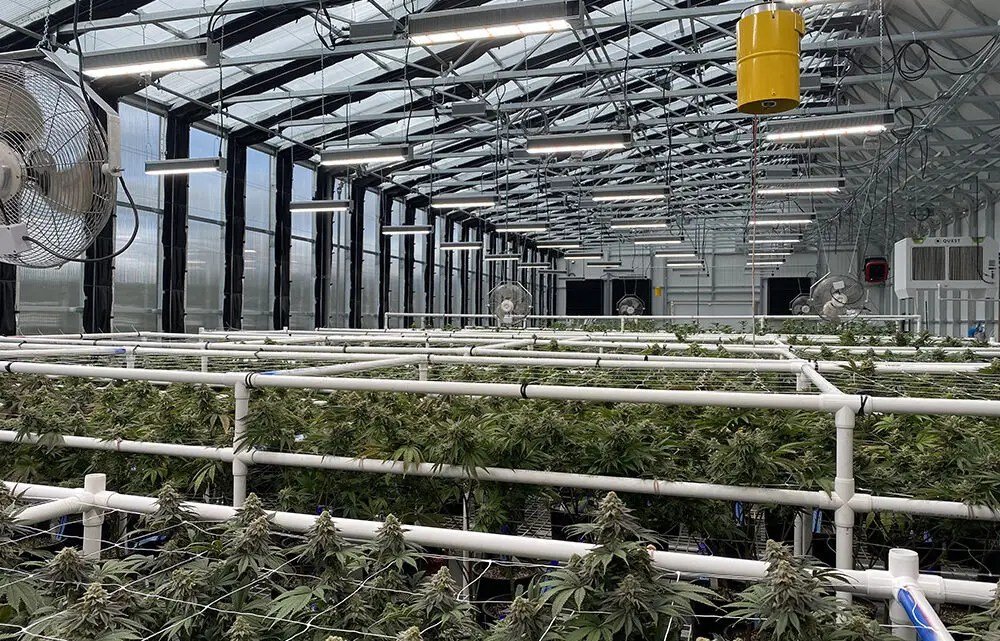
In the carefully controlled world of a greenhouse, every factor—from light to water to temperature—plays a crucial role in plant vitality. But there's an invisible force, often overlooked in its potential, that can dramatically unlock superior growth: carbon dioxide (CO2). For any serious grower aiming for peak performance and unprecedented yields, Understanding CO2 Enrichment for Plant Growth isn't just a tactic; it's a fundamental strategy for success.
Think of CO2 as the primary food source for your plants. Just as you need nutrients from the soil, plants primarily "eat" CO2 from the air, converting it into energy through the miraculous process of photosynthesis. While the atmosphere provides a baseline, often it's not enough to satisfy a plant's full growth potential, especially in an optimized greenhouse environment. By strategically increasing CO2 levels, you're not just feeding your plants; you're supercharging their ability to thrive.
At a Glance: The Essentials of CO2 Enrichment
- CO2 is Plant Food: Plants use CO2, water, and sunlight to create the sugars they need to grow.
- Atmospheric Limits: Natural CO2 levels (around 400 ppm) often restrict plant growth in an otherwise ideal greenhouse.
- The Power Up: Increasing CO2 availability enhances photosynthesis, leading to faster growth and significantly higher yields.
- Sweet Spot: Most greenhouse crops thrive with CO2 levels between 800–1,200 ppm.
- Methods Galore: From burning fuel to injecting pure CO2, several techniques can enrich your greenhouse atmosphere.
- It's a System: Optimal CO2 enrichment requires precise control, careful distribution, and balancing with other environmental factors.
- Safety First: Monitoring CO2 levels is critical for both plant health and human safety.
The Unseen Fuel: Why CO2 Matters for Plant Life
Every green leaf in your greenhouse is a tiny solar panel, tirelessly converting light energy into chemical energy. This energy, stored as glucose, is the building block for stems, leaves, flowers, and fruit. The key ingredients for this metabolic alchemy? Sunlight, water, and carbon dioxide.
Plants absorb CO2 through tiny pores on their leaves called stomata. In a natural outdoor setting, CO2 is relatively consistent, averaging around 400 parts per million (ppm). While this is enough for survival, it's far from optimal for maximum growth, particularly for crops in a high-yield environment like a modern greenhouse. When CO2 is abundant, plants don't have to work as hard to "breathe," freeing up energy to focus on what growers really care about: growth.
Unlocking Growth: The Benefits of CO2 Enrichment
When you boost CO2 levels in your greenhouse, you're not just giving your plants a little extra; you're fundamentally altering their growth potential. The impacts are profound and multifaceted:
1. Turbocharging Photosynthesis
At the heart of it all, elevated CO2 concentrations (typically between 800-1200 ppm) dramatically increase the rate of photosynthesis. Imagine a factory assembly line. If a critical component suddenly becomes more readily available, the entire line speeds up. For plants, this means the Rubisco enzyme, crucial for carbon fixation, works more efficiently, and the energy-wasting process of photorespiration is reduced. More efficient energy conversion means more growth, faster.
2. Bigger Plants, Bigger Harvests
The direct result of enhanced photosynthetic rates is a significant boost in plant biomass and overall yield. We're talking about tangible improvements—for common greenhouse crops like tomatoes, cucumbers, peppers, and lettuce, yields can jump anywhere from 15% to over 30%. This isn't just about larger individual fruits; it’s about faster leaf development, more vigorous vegetative growth, and ultimately, a more prolific harvest from each plant.
3. Smarter Water Use (and Less Thirsty Plants)
Here’s a benefit often overlooked: improved water use efficiency (WUE). When CO2 levels are higher, plants don't need to open their stomata as wide or for as long to absorb sufficient CO2. Less stomatal opening means less water vapor escapes through transpiration. This translates to reduced water consumption, making your irrigation more efficient and potentially saving significant resources, especially valuable in water-stressed regions.
4. Deeper Roots, Sweeter Fruits, Stronger Resilience
The benefits extend beyond the obvious. With greater carbon availability, plants can invest more energy into developing robust root systems, which in turn enhances nutrient uptake from the growing medium. Some studies even suggest positive effects on flowering synchrony, increased sugar content in fruits, and improved resilience against environmental stressors like drought. However, a word of caution: this rapid biomass accumulation can sometimes dilute essential nutrients like nitrogen, requiring adjustments to your fertilization program.
Finding Your Sweet Spot: Optimal CO2 Levels for Different Crops
The magic isn't in simply adding CO2; it's in finding the right amount for your specific crops and conditions. Pushing levels too high offers diminishing returns and can even be detrimental.
- Ambient Level (~400 ppm): This is your baseline. At this concentration, plants photosynthesize and grow, but they're often limited by CO2 availability.
- Moderate Enrichment (600–800 ppm): Here, you’ll start to see noticeable increases in photosynthetic rates and moderate enhancements in growth. It’s a good starting point for experimentation.
- Optimal Enrichment (800–1,200 ppm): For most greenhouse crops, this range represents the sweet spot. You'll achieve maximum growth stimulation and the best return on your CO2 investment.
- High Enrichment (>1,200 ppm): Beyond this point, additional benefits become marginal, if they exist at all. In some species, excessively high CO2 can even lead to physiological stress or stomatal closing, which defeats the purpose.
It’s also crucial to remember that not all plants respond equally. C3 plants—which include most common greenhouse vegetables like tomatoes, lettuce, peppers, and cucumbers—benefit significantly more from elevated CO2 than C4 plants like maize or sorghum, which have evolved a more efficient internal CO2 concentration mechanism.
Bringing CO2 to Your Plants: Enrichment Methods Explained
Once you understand the "why," the next step is the "how." Various methods exist for CO2 enrichment, each with its own advantages, costs, and considerations. If you're looking for dedicated systems, Learn about CO2 generators.
1. Combustion of Fuels (Natural Gas, Propane)
This is a popular method, especially in cooler climates. By burning natural gas or propane within the greenhouse, CO2 is released as a byproduct. A significant bonus: it also provides heat, effectively killing two birds with one stone.
- Pros: Cost-effective, especially if you need supplemental heat anyway.
- Cons: Requires excellent ventilation to prevent the buildup of harmful combustion byproducts like carbon monoxide and ethylene. Regular maintenance of burners is essential for safety and efficiency.
2. Compressed CO2 Injection
For precision and purity, compressed CO2 injection is hard to beat. Industrial-grade CO2 is stored in cylinders (or large bulk tanks for commercial operations) and injected directly into the greenhouse atmosphere.
- Pros: Pure CO2, allowing for extremely precise control over concentration. No risk of harmful byproducts.
- Cons: Higher infrastructure costs for storage and delivery systems, plus ongoing supply costs (e.g., $200-$400/acre per season, depending on usage).
3. Fermentation Systems
Less common in large commercial operations but a viable sustainable option for some, fermentation systems use yeast or bacteria to biologically generate CO2 through the decomposition of organic matter (often sugar solutions).
- Pros: Can be integrated into sustainable or organic operations; lower energy input.
- Cons: Less precise control over CO2 concentration; system maintenance and replenishment of materials are required.
4. Decomposition of Organic Matter
Similar to fermentation but often less controlled, simply allowing organic waste (like compost or decaying plant material) to decompose releases CO2.
- Pros: Very inexpensive, utilizes waste products.
- Cons: Extremely difficult to control CO2 concentration; primarily suitable for very small hobby greenhouses where precise levels aren't critical.
5. Dry Ice
Solid CO2, known as dry ice, sublimates (turns directly into gas) at room temperature. Placing blocks of dry ice in a greenhouse can slowly release CO2.
- Pros: Relatively inexpensive ($1-$3/lb); a pound can maintain 1,300 ppm in 100 sq ft for a day.
- Cons: Low shelf-life; difficult to store; risk of rapid sublimation leading to dangerously high, toxic levels (>2,000 ppm) if not managed carefully. Requires proper ventilation when handling due to its extreme cold (-109°F).
6. Chemical Method
This method typically involves a chemical reaction, such as baking soda mixed with an acid (like acetic acid or vinegar), to produce CO2.
- Pros: Simple in principle.
- Cons: Generally considered expensive and impractical for all but the smallest, most experimental setups due to the sheer quantity of materials needed for continuous enrichment.
The Brains of the Operation: Controlling and Distributing CO2
Simply producing CO2 isn't enough; you need to deliver it uniformly and maintain target concentrations precisely. Modern greenhouses leverage sophisticated technology for this:
- Sensors: Infrared CO2 sensors continuously monitor the ambient CO2 level within the greenhouse.
- Automated Controllers: These sensors are linked to smart environmental controllers that automatically trigger CO2 delivery systems (e.g., opening a valve for compressed CO2, or adjusting a burner's output) when levels fall below the set point.
- Distribution Systems: To ensure even coverage across the plant canopy, CO2 is often distributed through perforated plastic tubing or specialized diffusers. This prevents pockets of high or low concentration, ensuring all plants benefit equally.
- Integration with Ventilation: The system also intelligently manages ventilation. If CO2 levels climb too high, or if it's no longer cost-effective to enrich (e.g., due to excessive heat requiring vents to open), the controller will adjust, sometimes temporarily ceasing CO2 delivery until conditions stabilize.
Navigating the Nuances: Challenges and Smart Considerations
While CO2 enrichment offers compelling benefits, it's not a set-it-and-forget-it solution. Several factors demand careful consideration:
1. The All-Important Cost-Benefit Analysis
Every grower must perform a thorough economic evaluation. What are the upfront costs of equipment, sensors, and distribution? What are the ongoing fuel or CO2 supply costs and labor? These must be weighed against the expected increase in yield, quality, and potentially reduced water usage. For many high-value crops, the return on investment is substantial, but it's not universal.
2. Environmental Impact
Combustion-based CO2 enrichment methods release greenhouse gases into the atmosphere. While the immediate benefit is to your plants, the broader environmental footprint is a factor to consider. Sustainable practices, like sourcing CO2 from industrial capture or exploring bio-based generation, are increasingly preferred.
3. Monitoring and Safety: A Non-Negotiable
Excessive CO2 levels are not only wasteful but can also be harmful. For plants, levels above 2,000 ppm can lead to stomatal closing and reduced growth. More critically, high CO2 concentrations pose a serious risk to human health, causing dizziness, headaches, and in extreme cases, unconsciousness or suffocation. Reliable monitoring systems with audible and visual alarms are absolutely crucial for any greenhouse implementing CO2 enrichment. Never enter a greenhouse without proper ventilation if CO2 enrichment has been active and a sensor isn't present or functional.
4. Crop-Specific Responses
As mentioned, C3 plants benefit most, but even within C3 categories, responses vary. Tomatoes might thrive at 1,000 ppm, while certain herbs might prefer slightly lower levels. Tailoring your strategy to the specific needs and genetic potential of your crops is vital for maximizing efficacy.
5. Optimizing the Whole Picture
CO2 supplementation isn't a silver bullet. It's most effective when all other growth factors are also optimized. Think of it this way: if your plants lack sufficient light, water, temperature, or nutrients, providing extra CO2 won't magically fix those deficiencies. In fact, CO2 enrichment often increases the plant's demand for these other factors:
- Light: Supplemental CO2 increases the light saturation point, meaning plants can effectively utilize more light without getting "full."
- Temperature: Faster growth under CO2 enrichment often means crops require a slightly higher optimum temperature.
- Nutrients: Rapid biomass accumulation can increase nutrient demand by as much as 25%. Pay particular attention to micronutrients like zinc and iron, which can become diluted.
A holistic approach, where CO2 is one piece of a meticulously managed puzzle, will yield the best results.
The Horizon: Future Trends in CO2 Management
The science and technology behind greenhouse CO2 management are continuously evolving. We can expect to see:
- Smarter Sensors and AI: Next-generation sensors will provide even more precise, localized CO2 data, feeding into AI-driven control systems that can dynamically adjust CO2 delivery based on plant physiological responses and real-time environmental conditions.
- Genetic Advancements: Plant breeders are working to develop new cultivars that are specifically optimized to respond even more effectively to elevated CO2 levels.
- Integrated Systems: Seamless integration of CO2 enrichment with other controlled environment technologies, such as advanced LED lighting systems (which can deliver specific light spectra at higher intensities), will create synergistic effects for unprecedented growth and resource efficiency.
- Sustainable Sourcing: A greater focus on capturing CO2 from industrial emissions or leveraging bio-refinery byproducts will help create a more circular and environmentally responsible approach to greenhouse operations.
These advancements promise even greater efficiency, higher yields, and a more sustainable future for horticultural production.
Your Next Steps Towards Enhanced Yields
Understanding CO2 enrichment is the first step toward transforming your greenhouse productivity. Whether you're a commercial grower looking to optimize your yield or a serious hobbyist aiming for the best possible growth, consider integrating CO2 into your environmental control strategy.
Start by assessing your current crops and their potential CO2 needs. Research the most suitable enrichment method for your scale and budget. Invest in reliable monitoring and control systems—safety should always be paramount. Finally, remember that CO2 enrichment is part of a larger ecosystem; ensure your lighting, temperature, water, and nutrient programs are all working in harmony to support your supercharged plants. With careful planning and execution, you’ll unlock a new level of growth and witness the remarkable power of CO2 firsthand.